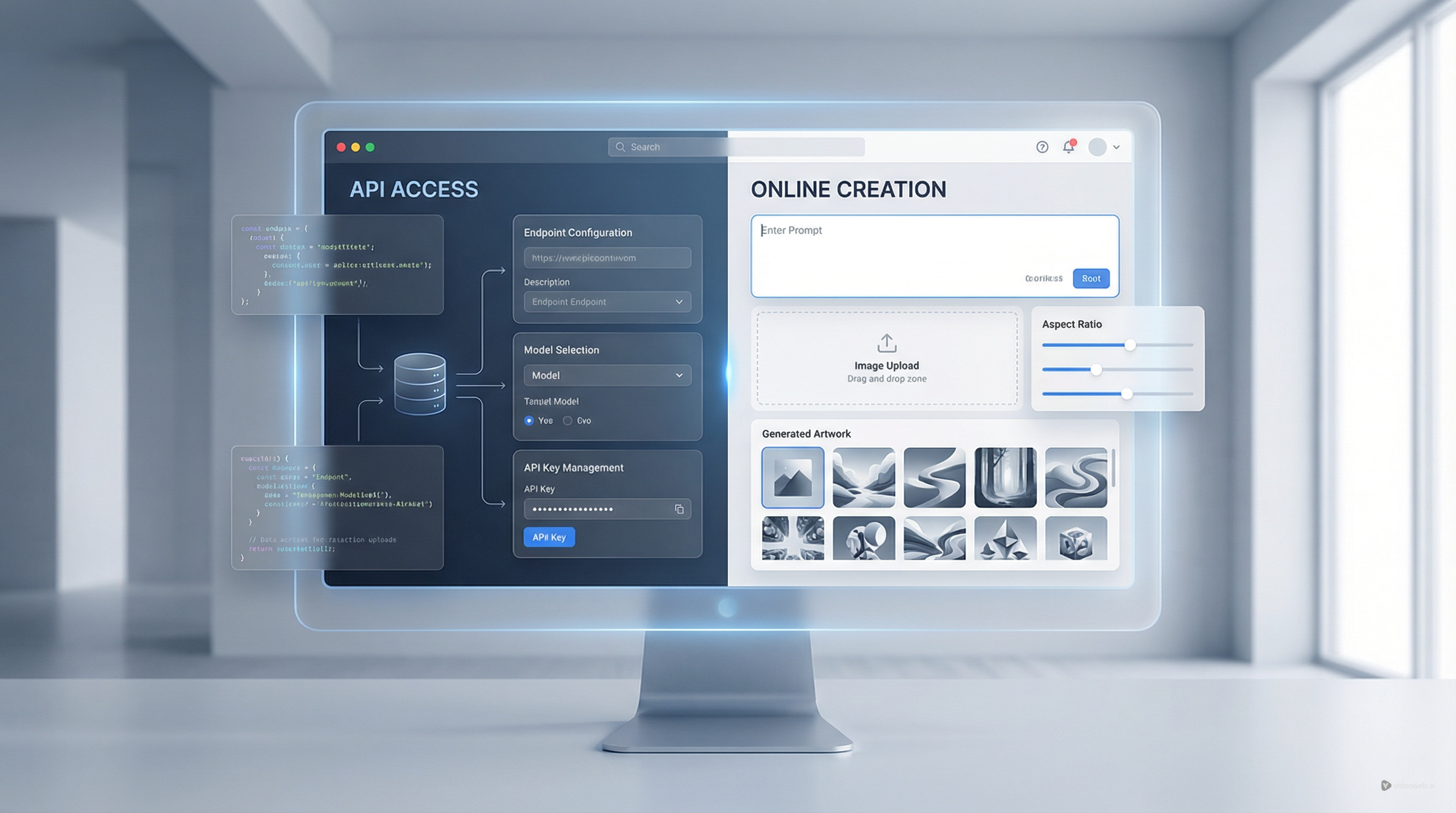
If you have been looking for a practical way to work with Nano Banana, the real question is not just whether the model is good. The more useful question is where you should access it.
For most readers, there are now two clear paths. If you want integration, testing, and a smoother route into production, the best starting point is the Nano Banana 2 API on Flaq AI. If you mainly want to create images online without setting up a developer workflow first, the browser-based option on Chat4o’s Nano Banana 2 page makes more sense.
This matters because many people searching for the Google Nano Banana API are not only comparing image quality. They are also comparing convenience, workflow, and how quickly they can go from testing prompts to actually shipping something. In that sense, Nano Banana 2 is less about abstract model hype and more about practical access.
Why Flaq AI is a strong place to access Nano Banana 2
For developers, startups, and product teams, Flaq AI’s Nano Banana 2 page is the more complete entry point. Instead of treating the model like a closed demo, it gives you a usable workflow around it.
That is important because many users do not want to jump straight into code before seeing how a model behaves. On Flaq AI, you can test prompts, review outputs, and evaluate whether the model fits your visual tasks before committing to API integration. In other words, it gives you a playground and an API path in the same place.
That makes the platform especially useful for people who need to answer practical questions such as:
- Is this model fast enough for high-volume creative work?
- Is the output good enough for social content, product visuals, or concept art?
- Can I test before I wire it into an app or workflow?
- Does the platform make it easy to compare this model with others?
This is where Flaq AI becomes more than a simple model listing. It works well for readers who want to try the model online first, then move into implementation later without changing platforms.
What the Nano Banana 2 API is good for
The Nano Banana 2 API is best understood as a fast, accessible image workflow for teams that want practical output and fast iteration. It is a good fit when you need quick experimentation, repeated prompt testing, or a reliable image generation layer inside a broader product.
That can include marketing teams creating campaign visuals, creative tools that need image generation inside the interface, internal business tools that generate mockups, or content teams experimenting with multiple visual directions before choosing a final look.
For many readers, the appeal is not only the model itself but the way it lowers friction. You can test prompts, compare responses, and decide whether Nano Banana 2 is enough for your needs or whether you should step up to something more premium.
That is also why the idea of Nano Banana 2 pricing should be handled carefully. Readers often search for a single price number, but the more useful question is total workflow cost. Speed, iteration, and failure rate all affect how expensive a model feels in real use.
How to think about Nano Banana 2 pricing in a practical way
When people search for Nano Banana 2 price or Nano Banana 2 API pricing, they usually want a simple answer. In practice, pricing is more useful when you frame it around use case.
If you are testing ideas, building prototypes, or comparing image styles, the most relevant question is whether the model lets you iterate cheaply and quickly enough. A fast model can reduce total project cost because you spend less time waiting, less time reworking prompts, and less time moving between tools.
If you are building for production, the evaluation changes. Then you care about throughput, reliability, quality consistency, and whether the platform makes it easy to scale. That is why it makes more sense to discuss Nano Banana 2 API pricing as part of a broader cost conversation rather than pretending one public number tells the whole story.
A good article should help readers think in terms of:
- prototyping cost
- production cost
- speed versus image quality
- platform convenience versus raw model access
- whether they need a lightweight option or a higher-end model
This framing is much more useful than treating pricing as a single isolated figure.
When Nano Banana 2 is enough, and when to move up
Not every reader needs the most premium model available. In many real workflows, Nano Banana 2 will already be enough. If your priority is fast ideation, frequent generation, or adding image features to a product without overcomplicating the stack, the Google Nano Banana API is a sensible place to start.
But some readers will eventually want more. That is where a Nano Banana Pro API discussion becomes useful.
If you want to compare upward paths on Flaq AI, a natural next stop is Nano Banana Pro. For broader image-model comparison, you can also look at Seedream 4.5 or Qwen Image 2.0.
A simple way to explain the differences is this:
- Nano Banana 2 works well for speed, iteration, and general image tasks.
- Nano Banana Pro is the better upgrade path when you want a more premium image workflow.
- Seedream 4.5 and Qwen Image 2.0 make sense when you want to compare alternative ecosystems instead of staying inside one model family.
That kind of comparison is much more helpful to readers than pretending there is one universally best image API.
What to do if you want direct online use instead of API setup
Not everyone reading this wants to build with an API today. Some people simply want to generate or edit images in a browser and move on.
That is where Chat4o’s Nano Banana 2 page becomes the cleaner option. It is easier to recommend for creators, casual users, and teams that want immediate output without starting from the developer side.
Instead of framing the platform as a coding-first access point, Chat4o feels closer to a direct-use workspace. You can prompt, upload, adjust, and generate without turning the experience into an engineering task.
That is a meaningful difference. Flaq AI is the stronger recommendation for readers who want API access and platform-level model comparison. Chat4o is the stronger recommendation for readers who want immediate online use.
So the decision becomes simple:
- Choose Flaq AI if you want to test Nano Banana 2 and move toward API integration.
- Choose Chat4o’s Nano Banana 2 tool if you want to create in the browser with less setup.
Final verdict
If your goal is to actually work with Nano Banana rather than just read about it, Flaq AI’s Nano Banana 2 API page is the better place to begin. It gives you a more practical route from testing to integration, and it also makes it easier to compare the model with other APIs on the same platform.
If your goal is immediate, direct image creation, Chat4o AI is the more intuitive alternative. It gives non-developers a cleaner way to use Nano Banana 2 online without turning the process into a technical setup project.
The good news is that these two options do not really compete for the same user. They solve different problems. Flaq AI is where you go when you want the model as infrastructure. Chat4o is where you go when you want the model as a tool.
Recommended APIs on Flaq AI
If you are already exploring image and video workflows on Flaq AI, these pages are worth checking next:
- Nano Banana 2 API
- Nano Banana Pro API
- Seedream 4.5 API
- Qwen Image 2.0 API
- Veo 3.1 API
- Seedance 1.5 Pro API
- Kling 3.0 API
- Wan 2.6 API
Recommended Chat4o AI Pages
For readers who prefer direct online use, these Chat4o pages fit well with the same workflow:
Related Article
- Google Veo 3.1 API on Flaq AI: Features, Pricing, and How to Use It
- Kling 3 API Guide: Pricing, Standard vs Pro, and How to Use It on Flaq AI
- Is Wan 2.7 Open-Source, API-Only, or Platform-First? What to Expect Next
- Seedream 5.0 Lite vs Nano Banana Pro: Which Chat4o Tool Fits Your Image Workflow Best?
- Create Personal Model with Nano Banana: 10 Best Prompts You Must Try
People Also Read
- How to Turn Images Into Better AI Prompts with HeyDream AI
- Nano Banana 2 vs Nano Banana Pro: What Changed and Which One Fits Your Workflow?
- How to Use Nano Banana 2 for AI Image Generation and Editing
- Nano Banana 2 vs Seedream 5.0: A Practical Comparison Guide
- How to Use the AI Music Video Generator: A Detailed Guide from Song to Video