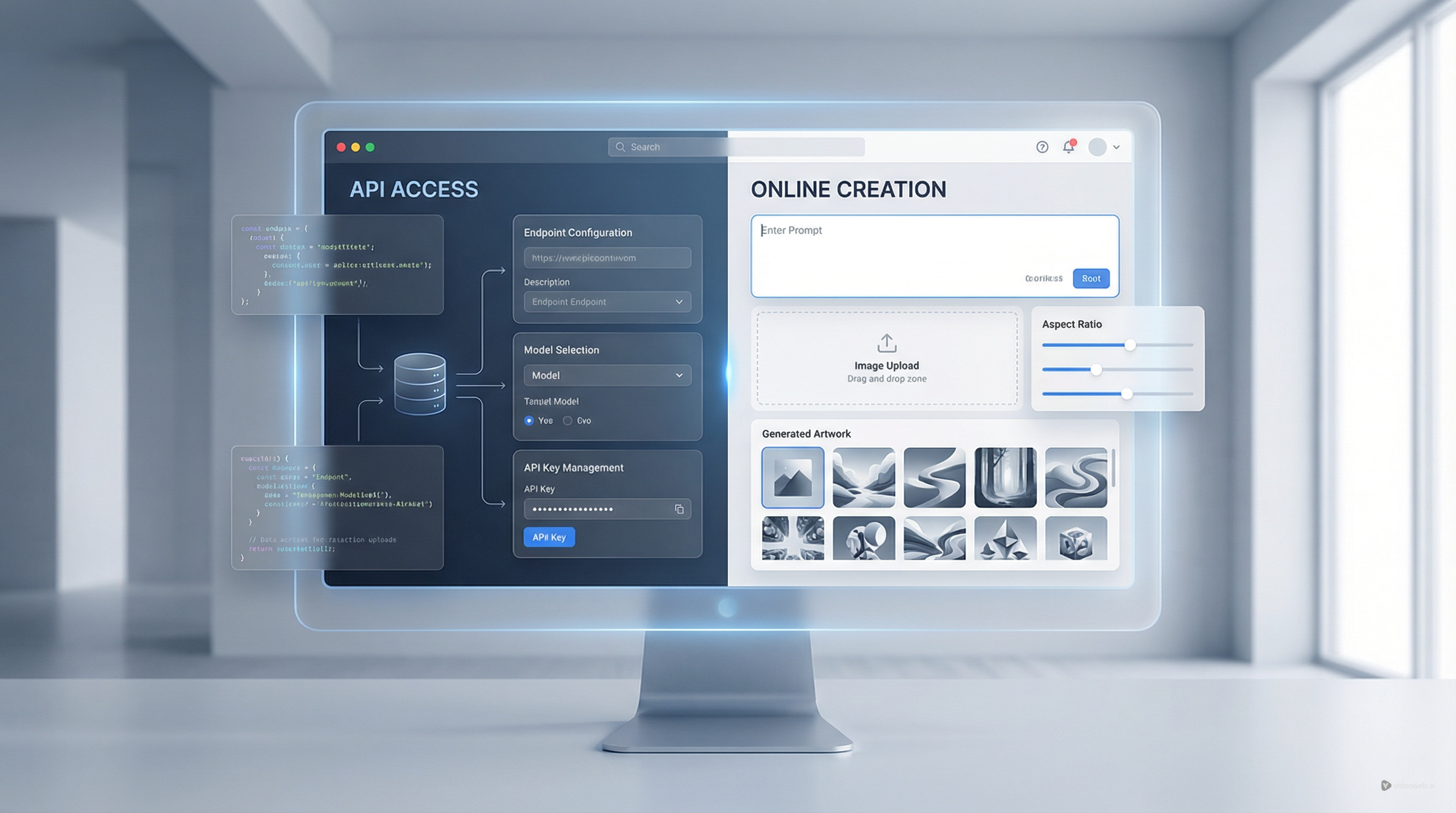
If you have been looking for a practical way to work with Nano Banana, the real question is not just whether the model is good. The more useful question is where you should access it.
对于一直在寻找实用方式来使用 Nano Banana 的人来说,关键问题不只是这个模型好不好,更重要的问题是:你应该在哪里来访问它。
For most readers, there are now two clear paths. If you want integration, testing, and a smoother route into production, the best starting point is the Nano Banana 2 API on Flaq AI. If you mainly want to create images online without setting up a developer workflow first, the browser-based option on Chat4o’s Nano Banana 2 page makes more sense.
对于大多数读者来说,现在有两条清晰的路径。如果你想要的是集成、测试,以及更顺畅地进入生产环境,那么在 Flaq AI 上的 Nano Banana 2 API 是最好的起点。如果你主要是想在线生成图片,而不想先搭建一套开发工作流,那么在浏览器中直接使用的 Chat4o Nano Banana 2 页面 会更合适。
This matters because many people searching for the Google Nano Banana API are not only comparing image quality. They are also comparing convenience, workflow, and how quickly they can go from testing prompts to actually shipping something. In that sense, Nano Banana 2 is less about abstract model hype and more about practical access.
这点很重要,因为许多搜索 Google Nano Banana API 的人不仅仅是在比较图像质量,他们同样在比较的是便利性、工作流,以及从测试提示词到真正上线交付之间的速度。从这个角度看,Nano Banana 2 与其说是一个抽象的模型话题,不如说是一个关于“如何实际用起来”的选择。
Why Flaq AI is a strong place to access Nano Banana 2
为什么 Flaq AI 是访问 Nano Banana 2 的强力选择
For developers, startups, and product teams, Flaq AI’s Nano Banana 2 page is the more complete entry point. Instead of treating the model like a closed demo, it gives you a usable workflow around it.
对于开发者、初创团队和产品团队来说,Flaq AI 的 Nano Banana 2 页面 是一个更完整的入口。它不是把模型当作一个封闭的演示,而是围绕模型提供了一整套可用的工作流。
That is important because many users do not want to jump straight into code before seeing how a model behaves. On Flaq AI, you can test prompts, review outputs, and evaluate whether the model fits your visual tasks before committing to API integration. In other words, it gives you a playground and an API path in the same place.
这很重要,因为很多用户并不想在没看到模型实际表现之前就直接写代码。在 Flaq AI 上,你可以先测试提示词、查看输出效果,并评估这个模型是否适合你的视觉任务,然后再决定要不要进行 API 集成。换句话说,它在同一个地方同时给你提供了“试验场”和“集成路径”。
That makes the platform especially useful for people who need to answer practical questions such as:
这让该平台对那些需要解决实际问题的人尤其有用,比如:
-
Is this model fast enough for high-volume creative work?
-
Is the output good enough for social content, product visuals, or concept art?
-
Can I test before I wire it into an app or workflow?
-
Does the platform make it easy to compare this model with others?
-
这个模型是否足够快,能应对高频、大批量的创意生产?
-
输出质量是否足以胜任社交媒体内容、产品视觉或概念设计?
-
在接入应用或工作流之前,我能否先进行充分测试?
-
这个平台是否方便我把它和其他模型进行对比?
This is where Flaq AI becomes more than a simple model listing. It works well for readers who want to try the model online first, then move into implementation later without changing platforms.
这正是 Flaq AI 不只是一个“模型列表”的原因。对于那些希望先在线试用模型,然后在同一平台上顺利过渡到实际落地实现的读者来说,它非常合适。
What the Nano Banana 2 API is good for
Nano Banana 2 API 适合用来做什么
The Nano Banana 2 API is best understood as a fast, accessible image workflow for teams that want practical output and fast iteration. It is a good fit when you need quick experimentation, repeated prompt testing, or a reliable image generation layer inside a broader product.
可以把 Nano Banana 2 API 理解为一条快速、易用的图像生成工作流,适用于那些需要实用产出和快速迭代的团队。当你需要快速试验、反复测试提示词,或者在更大的产品体系中嵌入一个稳定的图像生成层时,它会是一个很好的选择。
That can include marketing teams creating campaign visuals, creative tools that need image generation inside the interface, internal business tools that generate mockups, or content teams experimenting with multiple visual directions before choosing a final look.
适用场景包括:为营销活动制作视觉素材的市场团队、需要在界面内集成图像生成功能的创意工具、用于产出视觉稿的内部业务工具,或是需要在选定最终风格前先探索多种视觉方向的内容团队。
For many readers, the appeal is not only the model itself but the way it lowers friction. You can test prompts, compare responses, and decide whether Nano Banana 2 is enough for your needs or whether you should step up to something more premium.
对很多读者来说,吸引人的不仅是模型本身,而是它如何减少使用阻力。你可以测试提示词、对比不同响应,然后判断 Nano Banana 2 是否已经足够满足你的需求,或者是否需要升级到更高端的模型。
That is also why the idea of Nano Banana 2 pricing should be handled carefully. Readers often search for a single price number, but the more useful question is total workflow cost. Speed, iteration, and failure rate all affect how expensive a model feels in real use.
这也是为什么谈论 Nano Banana 2 定价 时需要更谨慎。很多人会去搜一个单一的价格数字,但更有价值的问题是整条工作流的总成本。速度、迭代效率以及失败率,都会直接影响一个模型在实际使用中“有多贵”。
How to think about Nano Banana 2 pricing in a practical way
如何用更实际的方式看待 Nano Banana 2 的价格
When people search for Nano Banana 2 price or Nano Banana 2 API pricing, they usually want a simple answer. In practice, pricing is more useful when you frame it around use case.
当人们搜索 Nano Banana 2 price 或 Nano Banana 2 API pricing 时,他们往往期待一个简单的答案。但在实际使用中,如果从具体用例的角度来理解价格会更有意义。
If you are testing ideas, building prototypes, or comparing image styles, the most relevant question is whether the model lets you iterate cheaply and quickly enough. A fast model can reduce total project cost because you spend less time waiting, less time reworking prompts, and less time moving between tools.
如果你正在做的是想法验证、原型搭建或者图像风格对比,那么最关键的问题是:这个模型是否能让你以足够低的成本、足够快的速度完成迭代。模型足够快时,你花在等待上的时间更少,重写提示词的时间更少,在不同工具之间来回切换的时间也更少,整体项目成本自然会下降。
If you are building for production, the evaluation changes. Then you care about throughput, reliability, quality consistency, and whether the platform makes it easy to scale. That is why it makes more sense to discuss Nano Banana 2 API pricing as part of a broader cost conversation rather than pretending one public number tells the whole story.
如果你要的是正式生产环境中的部署,评估逻辑会有所不同。你会更在意吞吐量、可靠性、质量一致性,以及平台是否便于扩展。因此,把 Nano Banana 2 API 定价 放在整套成本结构中来讨论,比单纯盯着一个公开价格数字要更有意义——因为一个数字并不能讲清全部情况。
A good article should help readers think in terms of:
一篇有用的文章,应当帮助读者从以下几个维度来思考:
-
prototyping cost
-
production cost
-
speed versus image quality
-
platform convenience versus raw model access
-
whether they need a lightweight option or a higher-end model
-
原型阶段的成本
-
生产阶段的成本
-
速度与图像质量之间的权衡
-
平台便利性与“直接访问模型”之间的取舍
-
自己到底需要的是轻量选项,还是更高端的模型
This framing is much more useful than treating pricing as a single isolated figure.
这种框架,比把价格当成一个孤立数字来看,要实用得多。
When Nano Banana 2 is enough, and when to move up
何时 Nano Banana 2 已经够用,何时需要往上升级
Not every reader needs the most premium model available. In many real workflows, Nano Banana 2 will already be enough. If your priority is fast ideation, frequent generation, or adding image features to a product without overcomplicating the stack, the Google Nano Banana API is a sensible place to start.
并不是每个用户都需要行业里“最贵、最顶”的模型。在很多真实的工作流中,Nano Banana 2 已经足够。如果你的首要目标是快速头脑风暴、频繁生成图片,或者是在不大幅增加技术栈复杂度的前提下,为产品增加图像功能,那么从 Google Nano Banana API 入手是很合理的。
But some readers will eventually want more. That is where a Nano Banana Pro API discussion becomes useful.
但也有一部分用户,最终会希望得到更多能力,这时讨论 Nano Banana Pro API 就有意义了。
If you want to compare upward paths on Flaq AI, a natural next stop is Nano Banana Pro. For broader image-model comparison, you can also look at Seedream 4.5 or Qwen Image 2.0.
如果你想在 Flaq AI 上对“升级路径”做横向对比,很自然的下一站是 Nano Banana Pro。如果希望更广泛地比较不同图像模型生态,则可以看看 Seedream 4.5 和 Qwen Image 2.0。
A simple way to explain the differences is this:
可以用一个简单的方式来解释它们之间的差异:
-
Nano Banana 2 works well for speed, iteration, and general image tasks.
-
Nano Banana Pro is the better upgrade path when you want a more premium image workflow.
-
Seedream 4.5 and Qwen Image 2.0 make sense when you want to compare alternative ecosystems instead of staying inside one model family.
-
Nano Banana 2 更适合追求速度、迭代效率以及通用图像任务的场景。
-
Nano Banana Pro 则是在你需要更高端图像工作流时,更自然的升级方向。
-
Seedream 4.5 和 Qwen Image 2.0 则适合当你想跳出单一模型家族,对比不同生态体系时使用。
That kind of comparison is much more helpful to readers than pretending there is one universally best image API.
这种比较方式,比声称“有一个对所有人都最好的图像 API”要实在得多。
What to do if you want direct online use instead of API setup
如果你不想配置 API,只想直接在线使用怎么办
Not everyone reading this wants to build with an API today. Some people simply want to generate or edit images in a browser and move on.
并不是所有读者现在都打算通过 API 来构建产品。有些人只是想在浏览器里生成或编辑图片,用完就走。
That is where Chat4o’s Nano Banana 2 page becomes the cleaner option. It is easier to recommend for creators, casual users, and teams that want immediate output without starting from the developer side.
这时,Chat4o 的 Nano Banana 2 页面 就成了更干脆的选择。对创作者、轻度用户、以及希望直接获得结果、而不想从开发端流程开始的团队来说,它更值得推荐。
Instead of framing the platform as a coding-first access point, Chat4o feels closer to a direct-use workspace. You can prompt, upload, adjust, and generate without turning the experience into an engineering task.
Chat4o 不是一个“编码优先”的访问入口,而更像一个“直接可用的工作空间”:你可以输入提示词、上传素材、调整参数并生成图片,而不必把整个过程变成一项工程项目。
That is a meaningful difference. Flaq AI is the stronger recommendation for readers who want API access and platform-level model comparison. Chat4o is the stronger recommendation for readers who want immediate online use.
这种差异非常关键:如果你想要的是 API 访问和平台级的模型比较,那么更推荐 Flaq AI;如果你要的是马上在线使用的体验,那么更推荐 Chat4o。
So the decision becomes simple:
因此,决策可以非常简单:
-
Choose Flaq AI if you want to test Nano Banana 2 and move toward API integration.
-
Choose Chat4o’s Nano Banana 2 tool if you want to create in the browser with less setup.
-
如果你希望先测试 Nano Banana 2,然后逐步走向 API 集成,请选择 Flaq AI。
-
如果你希望在浏览器中低门槛地直接创作,请选择 Chat4o 的 Nano Banana 2 工具。
Final verdict
最终结论
If your goal is to actually work with Nano Banana rather than just read about it, Flaq AI’s Nano Banana 2 API page is the better place to begin. It gives you a more practical route from testing to integration, and it also makes it easier to compare the model with other APIs on the same platform.
如果你的目标是“真正拿 Nano Banana 来做事”,而不仅是了解相关信息,那么从 Flaq AI 的 Nano Banana 2 API 页面 开始会更合适。它提供了从测试到集成的完整路径,也便于你在同一平台上和其他 API 进行对比。
If your goal is immediate, direct image creation, Chat4o AI is the more intuitive alternative. It gives non-developers a cleaner way to use Nano Banana 2 online without turning the process into a technical setup project.
如果你的目标是立即、直接地生成图片,那么 Chat4o AI 则是更直观的选择。它为非开发者提供了一种更简洁的方式来在线使用 Nano Banana 2,而无需把整个过程变成复杂的技术搭建。
The good news is that these two options do not really compete for the same user. They solve different problems. Flaq AI is where you go when you want the model as infrastructure. Chat4o is where you go when you want the model as a tool.
好消息是,这两个选项并不真正“争夺同一种用户”。它们解决的是不同的问题:当你需要把模型当作基础设施使用时,去 Flaq AI;当你想把模型当作一件直接上手的工具时,去 Chat4o。
Recommended APIs on Flaq AI
Flaq AI 上推荐的 API
If you are already exploring image and video workflows on Flaq AI, these pages are worth checking next:
如果你已经在 Flaq AI 上探索图像和视频相关的工作流,那么下面这些页面值得接着看:
- Nano Banana 2 API
- Nano Banana Pro API
- Seedream 4.5 API
- Qwen Image 2.0 API
- Veo 3.1 API
- Seedance 1.5 Pro API
- Kling 3.0 API
- Wan 2.6 API
Recommended Chat4o AI Pages
推荐的 Chat4o AI 页面
For readers who prefer direct online use, these Chat4o pages fit well with the same workflow:
对于偏好直接在线使用的读者来说,下面这些 Chat4o 页面可以很好地接续你的工作流:
Related Article
相关文章
- Google Veo 3.1 API on Flaq AI: Features, Pricing, and How to Use It
- Kling 3 API Guide: Pricing, Standard vs Pro, and How to Use It on Flaq AI
- Is Wan 2.7 Open-Source, API-Only, or Platform-First? What to Expect Next
- Seedream 5.0 Lite vs Nano Banana Pro: Which Chat4o Tool Fits Your Image Workflow Best?
- Create Personal Model with Nano Banana: 10 Best Prompts You Must Try
People Also Read
你可能还会感兴趣
- How to Turn Images Into Better AI Prompts with HeyDream AI
- Nano Banana 2 vs Nano Banana Pro: What Changed and Which One Fits Your Workflow?
- How to Use Nano Banana 2 for AI Image Generation and Editing
- Nano Banana 2 vs Seedream 5.0: A Practical Comparison Guide
- How to Use the AI Music Video Generator: A Detailed Guide from Song to Video