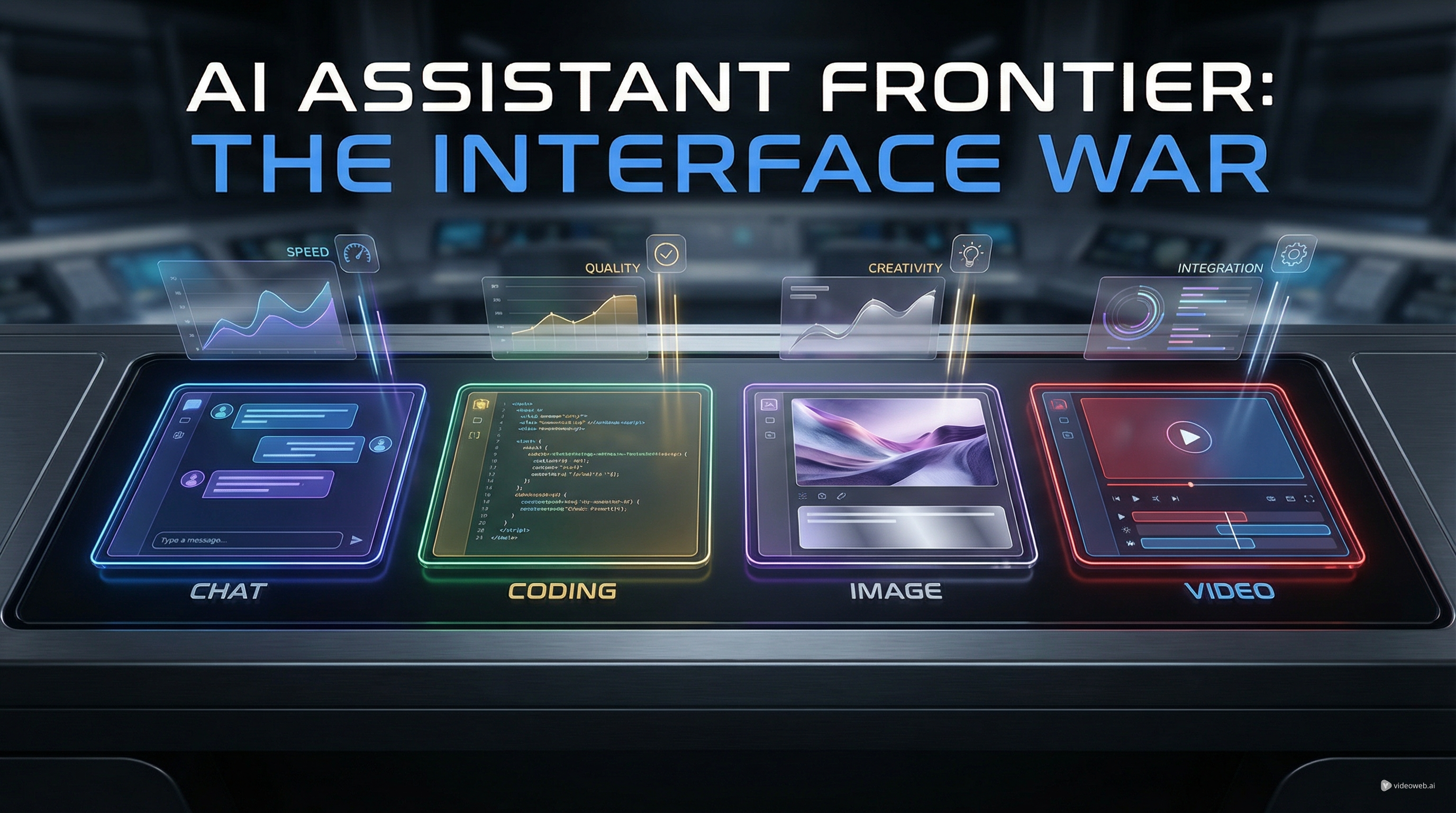
The frontier AI race looks simpler from far away than it does in real use. People still ask, “Which one is best?” but that is no longer the most useful question. In 2026, the real answer depends on what you want the model to do. Chat quality, coding depth, image generation, real-time search, video creation, and platform workflow are no longer led by the same company.
This review compares the newest public stacks from ChatGPT, Grok, Claude, and Gemini. It also looks at the broader product ecosystems around them, because company strategy now matters almost as much as raw model quality.
The short version is this: OpenAI still feels like the broadest all-round platform, Anthropic remains one of the strongest choices for careful long-form reasoning and developer workflows, Google has become especially hard to ignore in multimodal and video creation, and xAI stands out most when live information, X integration, and fast-moving creative products are part of the appeal.
A quick snapshot of the current landscape
OpenAI’s current flagship story is no longer just “ChatGPT.” It now includes GPT-5.4 for top-tier reasoning, newer Codex products for coding work, and a much stronger image stack than many casual users still assume. Anthropic’s public momentum centers on Claude Sonnet 4.6, Opus 4.6, and the increasingly serious Claude Code workflow. Google is pushing Gemini 3.1 Pro for advanced reasoning, Nano Banana 2 and Gemini 3.1 Flash Image for image work, and Veo 3.1 for video. xAI’s visible stack revolves around Grok 4, Grok 4.1 Fast, and Grok Imagine for media generation.
That means this comparison is no longer just chatbot versus chatbot. It is now product suite versus product suite.
Comparison chart
| Category | OpenAI | xAI | Anthropic | |
|---|---|---|---|---|
| Best fit for general chat | Excellent | Very strong | Excellent | Very strong |
| Best fit for real-time info | Strong | Excellent | Good | Strong |
| Best fit for coding | Excellent | Strong | Excellent | Very strong |
| Native image generation | Excellent | Strong | Limited native focus | Excellent |
| Native video generation | Weak right now | Growing | Limited native focus | Excellent |
| Agentic workflow maturity | Excellent | Strong | Excellent | Very strong |
| Consumer app ecosystem | Excellent | Strong | Strong | Excellent |
| Biggest current edge | Breadth | Live search + personality | Long-form reasoning + code | Multimodal + video |
| Biggest current weakness | Strategy shifts can be abrupt | Safety scrutiny | Usage caps and capacity pressure | Product positioning can feel fragmented |
The chart makes one thing clear: there is no universal winner. Each company now has at least one lane where it feels genuinely first-choice.
Chat and reasoning: who feels smartest in everyday use?
For most readers, this is still the core question. Which assistant gives the most useful answer when you sit down and ask for help?
OpenAI still feels like the most balanced answer for broad everyday use. ChatGPT is strong at structured answers, editing, technical explanation, and shifting between casual and professional tone. It also benefits from OpenAI’s habit of turning model advances into a full consumer workflow instead of leaving them as API-only news. If you want one assistant that can brainstorm, write, explain, plan, and switch tasks smoothly, OpenAI remains one of the safest picks.
Grok feels different. It is less “neutral office assistant” and more “fast, internet-aware AI with opinions and energy.” That makes it attractive for trend-heavy use cases, current events, social media culture, and search-connected tasks. When people look for ai grok experiences, this is usually what they mean: something lively, current, and plugged into the now. The trade-off is that the same style can feel less controlled than OpenAI or Anthropic in more formal settings.
Claude still has one of the best reputations for calm, careful, long-form reasoning. It often shines when the task needs structure rather than speed: policy summaries, long documents, nuanced writing, technical analysis, and patient back-and-forth refinement. For many users, claude ai is still the easiest model to trust when the task is intellectually heavy and the tone matters.
Gemini has improved enough that it now belongs in every serious top-tier comparison. The latest Pro-tier release is not just “Google’s alternative chatbot.” It is increasingly competitive in research-style tasks, multimodal reasoning, and complex workflows that mix text with other modalities. If you think of a gemini chatbot as only a consumer app, you will underestimate how much Google has widened the product around it.
If you want the simple verdict for chat alone, ChatGPT and Claude still feel the most consistently polished, Grok feels the most live and internet-shaped, and Gemini feels the most improved and strategically broad.
Image generation: the category that changed the fastest
Image creation may be the category where old assumptions are most outdated.
OpenAI used to be discussed mainly through the lens of earlier DALL·E releases. That is no longer enough. The newer ChatGPT Images product is much better at edits, consistency, and practical image workflows. That is why search terms like chatgpt ai image, chatgpt image generation, and chatgpt image ai now make more sense in 2026 than they did a year earlier. OpenAI is no longer just competitive in image generation; it is relevant again for people who want a text-and-image workflow in one assistant.
Google is equally important here. Nano Banana 2 and Gemini 3.1 Flash Image give Google a very strong visual lane, especially for faster iteration and broad access across its ecosystem. That is why phrases like gemini image ai and gemini 3.1 flash image now point to something real and current rather than vague marketing language. Google’s strength is not only image quality; it is the way image tools fit into a larger multimodal stack.
xAI is more mixed but still notable. Grok Imagine pushes Grok beyond text chat into images, video, and audio. That makes terms like grok image, grok imagine, and grok ai image generator increasingly relevant to creator workflows. The upside is momentum and creative ambition. The downside is that xAI is also facing serious scrutiny around image safety, which matters if trust and brand safety are part of your workflow.
Anthropic is the outlier here. Claude remains highly useful for prompt design, image analysis, and creative planning, but it is not the native image-generation leader in the way OpenAI and Google now are. If your work is image-first, Claude is better as the strategist than as the image engine.
Coding and agents: the most competitive category after chat
Coding is now a contest between products, not just models.
OpenAI’s coding story has become broader and more serious thanks to GPT-5.3-Codex and its expanding role across the ChatGPT and Codex ecosystem. When people search for codex, codex openai, or even codex 5.4, what they usually want is an OpenAI workflow that can reason deeply, edit code intelligently, and stay useful over long tasks. OpenAI is especially strong when coding has to connect with research, tool use, or multi-step technical planning.
Anthropic remains elite here. Claude Code has become one of the clearest examples of an AI coding product that understands real developer workflows instead of just writing snippets. It now goes beyond ordinary code completion and moves toward genuine task execution. That is why terms like claude code, claude code ai, and claude code auto mode increasingly reflect an actual workflow category rather than a simple feature list.
Google is also more competitive than many people realize. Gemini 3.1 Pro is now being positioned as a serious model for agentic coding and long-context technical reasoning. In practice, google gemini code is most compelling when the task involves system-level thinking, multiple files, multimodal inputs, or technical planning beyond just writing a function.
Grok is the most uneven in this category, but it still matters. The coding experience benefits from Grok’s real-time search and tool-connected mindset. That makes it appealing for tasks that blend coding with documentation lookup, current APIs, or fast-moving internet context. It is not always the first choice for conservative production environments, but it has real utility.
If the task is pure software development, OpenAI and Anthropic still feel strongest overall. If the work blends code with multimodal research or large context, Google becomes more attractive. If the work is search-heavy and internet-connected, Grok becomes more interesting than its reputation sometimes suggests.
Video and multimodal creativity: Google leads the clearest lane
This is where the field separates sharply.
Google has the most coherent native video story among these four companies right now because of Veo 3.1. It has moved beyond demo status into a more practical creation product, especially for text-to-video and image-to-video workflows. If you are comparing ecosystems instead of hype cycles, Google is the company that currently feels most serious about making video creation part of a broader mainstream AI workflow.
OpenAI, by contrast, looks less committed in video than many expected. The recent shutdown of Sora changed the tone around OpenAI’s creative video ambitions. That does not weaken ChatGPT as a chat or coding platform, but it does mean OpenAI is no longer the obvious name to lead with in consumer AI video discussions.
xAI’s media story is more experimental but also more ambitious than many people realize. Grok Imagine is not just about still images. It points toward a broader creative stack that includes video and audio generation. That means grok ai video is not a random keyword anymore; it reflects a real direction in xAI’s product strategy.
Anthropic is again the exception. Claude is useful in creative planning, script refinement, shot ideas, and production thinking, but not as a first-choice native video engine.
For creators, the simple answer is that Google currently looks strongest in official native video, xAI looks ambitious and expanding, OpenAI is strategically refocusing, and Anthropic is strongest as the brain around the media workflow rather than the camera itself.
The company strategies matter now
It is no longer enough to compare isolated models. You also have to compare what kind of company is behind them.
OpenAI still wins on breadth. It has a strong consumer app, strong APIs, serious coding products, competitive image generation, and a habit of turning model releases into usable workflows. Anthropic feels the most focused on thoughtful work, coding depth, and controlled execution. Google wins the broad multimodal race when you look at search, workspace integration, image creation, and video together. xAI feels the most natively connected to live internet culture and real-time information, but that comes with sharper safety and trust questions than its competitors are currently facing.
That is also why the “best AI” conversation is less stable than it used to be. Product shifts now happen fast. Sora can disappear. Claude can tighten usage. Grok can expand creatively while facing legal pressure. Google can turn what looks like a fragmented stack into a meaningful ecosystem advantage.
Final verdict: who should choose what?
Choose OpenAI if you want the strongest all-rounder. The latest ChatGPT stack remains one of the best choices for general work, mixed professional use, and people who want one ecosystem that can handle chat, coding, and image tasks without too much friction. For readers who naturally search by product terms, that broad appeal is also why phrases like chatgpt ai and openai chatgpt remain so common.
Choose Anthropic if your work is heavy on long documents, careful reasoning, and serious development workflows. Claude still feels especially strong when quality, structure, and tone matter more than speed or entertainment value.
Choose Google if your work is genuinely multimodal. Gemini 3.1 Pro, Nano Banana 2, and Veo 3.1 make Google unusually strong across reasoning, image work, and video creation at the same time.
Choose xAI if you want a more live, current, search-connected assistant and you are especially interested in the intersection of chat, social context, and emerging creative products. Grok is not the safest default for every organization, but it is one of the most distinctive products in the field.
The simplest honest conclusion is this: ChatGPT still feels like the best general recommendation, Claude remains one of the best deep-work assistants, Gemini has the broadest upward momentum in multimodal creation, and Grok is the most internet-native and fast-moving. Which one wins depends less on benchmarks now and more on what kind of work you actually do.
A practical place to try similar workflows on Chat4o AI
If you want to compare several model styles without bouncing between different official apps, Chat4o AI is the more practical route. For side-by-side chat work, you can test chatgpt ai, claude ai, gemini chatbot, and ai grok in one environment instead of treating each ecosystem as a separate island. If you specifically want an OpenAI-branded entry in that mix, openai chatgpt fits naturally into the same comparison flow.
If your main interest is developer workflow, the more useful angle is to compare codex, claude code, and google gemini code as different styles of AI assistance for technical work. Readers who want more search-specific phrasing can also treat codex openai, codex 5.4, claude code ai, and claude code auto mode as narrower entry points into the same broader coding comparison.
For visual creation, Chat4o also gives you an easier way to explore chatgpt ai image, gemini image ai, and nano banana 2 without needing to learn a new interface every time you switch models. In a more image-editing-focused context, chatgpt image generation, chatgpt image ai, and gemini 3.1 flash image make sense as more precise search-friendly variants. If you are also curious about the broader creator trend around grok image, grok imagine, and the grok ai image generator direction, this kind of unified workspace is much easier to test in practice.
For video, VEO 3.1 is the clearest entry point on the platform, especially if you want a more direct text-to-video or image-to-video workflow. If you are browsing broader search intent around grok ai video, it makes sense to pair that interest with the platform’s Grok page and its dedicated Veo workflow rather than forcing one model to cover every media task.
One small wording note: people may search for chatgpt 5.4 or even use phrases like chatgpt ai chatbot and chatbot claude when they are really just looking for a familiar model hub. The actual Chat4o landing page here is currently organized around GPT-5.1, so it is better to treat those phrases as search intent rather than as literal page labels.
Related Article
- Gemini 3.1 Pro Release: What’s New, and Is It Better Than Gemini 3.0?
- Grok 4 vs Chat GPT 5 (2026): Which AI Fits You Best?
- GPT-5.2 vs Claude Opus 4.5: Which AI Model Fits Your Workflow Best?
- Unlock Visual Conversations with GPT Image Chat 4o on Chat4o
People Also Read
- HeyDream AI Image Generator Guide: Best Models for Text-to-Image and Image-to-Image
- Veo 3.1 Video Generation Guide: How to Create Cinematic Clips on HeyDream AI
- Try Veo 3.1 in Dream Machine AI: A Practical Guide to Text-to-Video and Image-to-Video Creation
- Veo 3.1 vs Sora 2: Which AI Video Model Performs Better?
- VideoWeb AI Video Generator 2026: Best Models for One Hub, Every AI Video Workflow
- SeaImagine AI Text-to-Video Guide: How to Choose Models and Create Better Clips
- The 2026 Image-to-Video Guide for Sea Imagine AI: Best Models & Prompts