Quick Summary
The best free Nano Banana AI tools for ecommerce are useful when they preserve the product you already sell while helping you test a new background, setting, colorway, product bundle, or ad direction. The practical question is not which tool makes the prettiest image in isolation. It is which one keeps packaging, proportions, materials, labels, and product details stable enough for the next creative decision.
Chat4O Free Nano Banana AI is the best overall starting point in this proposed ranking because its live page presents browser-based text-to-image generation, uploaded-image editing, style transfer, and product-render use cases without registration. Recheck the live access terms before publishing: “free,” “no signup,” generation limits, downloads, and watermarks can change.
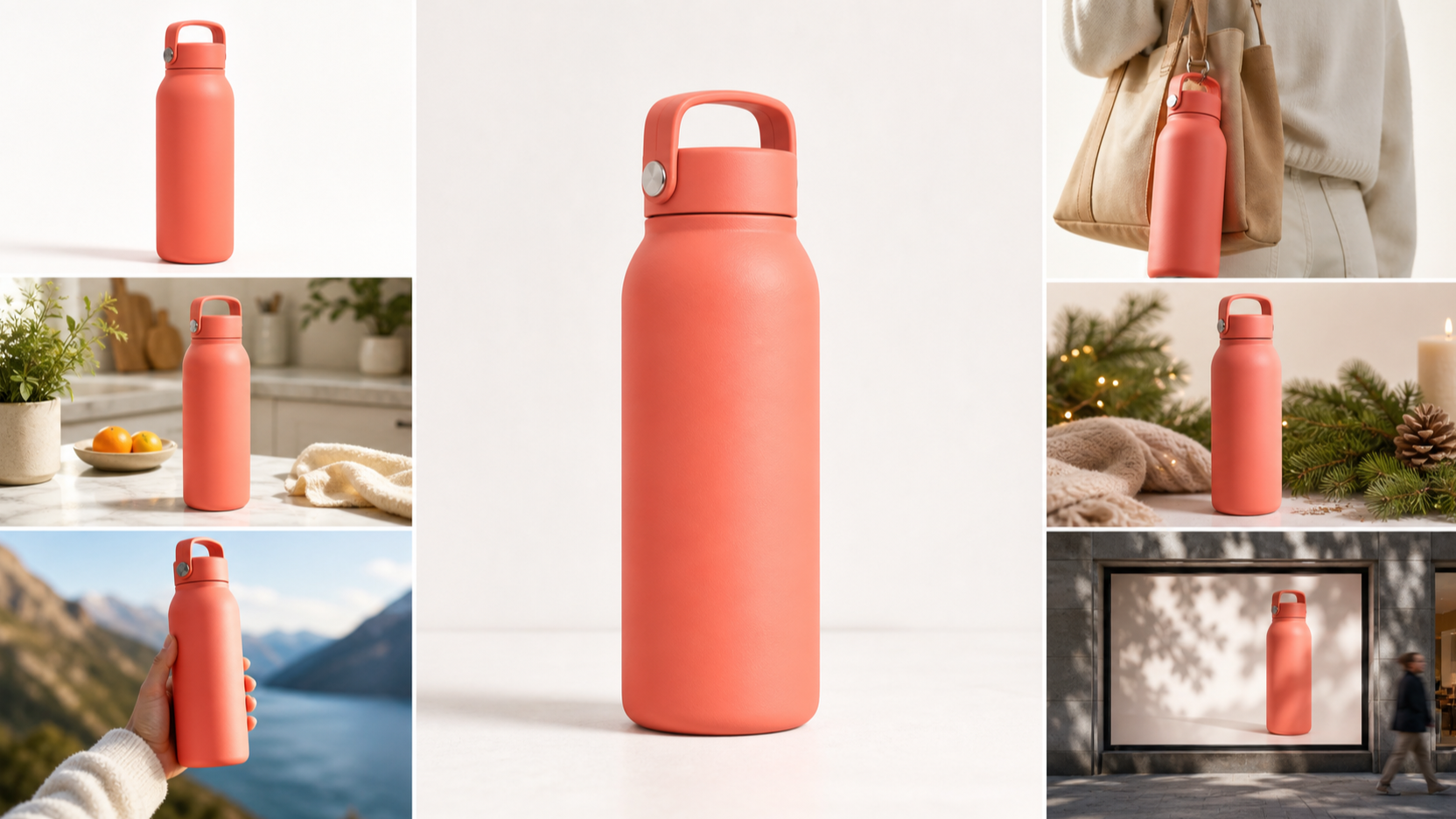
All images in this article are AI-created ecommerce concepts, not verified representations of a physical product. Review every final asset against the real item before publishing it in a listing, ad, or campaign.

How We Would Test Free Nano Banana AI Tools for Ecommerce
This is a proposed editorial ranking, not a claim that one platform has objectively won every test. Before assigning final positions, test the same product photograph, prompt, aspect ratio, and evaluation checklist on all ten tools. That keeps the comparison focused on ecommerce reliability rather than a lucky single image.
Use one unbranded product photo with a distinctive shape, cap, material, and label area. Run the same five tasks: a white-background packshot, a lifestyle scene, a background replacement, a product color variation, and a creator-style vertical ad. Review the result at listing size and full size.
| Evaluation point | What a seller should inspect |
|---|---|
| Product fidelity | Shape, dimensions, cap, material, packaging, logo area, and color stay accurate |
| Listing readiness | Edges are clean, the product is fully visible, and the background fits the marketplace brief |
| Edit control | Only the requested background, color, or surrounding element changes |
| Ad usefulness | The composition leaves room for manually verified text, price, benefit, and CTA |
| Repeatability | Several variations retain the same product identity rather than drifting |
The final order should change if a tool fails this test. A beautiful but inaccurate packaging image is less useful than a simpler result that keeps the real product recognizable.

1. Chat4O AI: Best Overall Free Starting Point
Chat4O Free Nano Banana AI is the most practical first test for a seller who wants to create and edit in one browser session. Its current page describes prompt-based generation, JPEG/JPG/WEBP/PNG uploads, photo enhancement, style transfer, local changes, and marketing or product-render use cases. That makes it a sensible starting point for white-background tests, product lifestyle directions, colorway experiments, and early ad concepts.
Best for: Shopify, Amazon, Etsy, and DTC sellers who want one simple place to test prompts and reference-image edits before committing to a larger workflow.
Watch for: Do not assume the generated label, logo, ingredient list, material finish, or size is correct. Verify those details on every ecommerce visual, and check the current page before saying the tool is unlimited, watermark-free, or commercial-use ready.

2. Flyne AI: Best for Product Photography and Ad Concepts
Flyne Free Nano Banana AI is a strong proposed second choice for product-photo exploration and campaign concepts. Its free tool page presents image generation, uploaded-photo editing, enhancement, color changes, and product-render examples. Use it to compare clean packshots against an ad-ready lifestyle composition with the same input image.
Best for: Product hero images, seasonal concepts, listing graphics, and a first pass at campaign variants.
Watch for: A product render is an art direction, not proof of what a physical item looks like. Keep original packaging photography available for visual checks.

3. AITryOn: Best for Fashion and Apparel Ecommerce
AITryOn Free Nano Banana AI belongs near the top when the ecommerce task centers on styling, garments, or fashion merchandising. Use it to explore outfit direction, model-plus-garment concepts, social fashion creative, and ideas that may later feed into virtual try-on or other apparel workflows.
Best for: Apparel sellers comparing styling directions, fashion accessories, garment color stories, and editorial merchandising concepts.
Watch for: Generated garments can alter seams, closures, print placement, drape, sizing, or fabric texture. A fashion image needs a manual garment check before it represents a listing.

4. UGC Maker: Best for Creator-Style Product Ads
UGC Maker Free Nano Banana AI is the focused choice for creator-style product advertising. Its page positions reference-guided image generation for UGC ads, product promotion, social posts, ecommerce visuals, and campaign exploration. That is a direct match for a marketer who needs a concept for TikTok, Reels, paid social, or creator briefs.
Best for: Vertical creator-style ads, product-in-hand concepts, social hooks, and mood boards for paid-social production.
Watch for: Hands, product labels, and small packaging detail deserve close inspection. Get permission before using identifiable people, customer photos, or creator images as source material.

5. Fylia AI: Best for an All-in-One Image and Video Workflow
Fylia Free Nano Banana AI is the practical pick for teams that want to begin with still-image concepts and may later add adjacent creative formats. Use it for product scenes, social assets, reference-led edits, and variations that need to fit into a larger content workflow.
Best for: Small marketing teams that want one broad creative environment for early product images and later campaign production.
Watch for: Do not treat an all-in-one workflow as a guarantee of the same controls, output quality, or terms in every related tool. Verify the individual tool page for the exact operation you need.

6. HeyDream AI: Best for Product Visuals That May Become Videos
HeyDream Free Nano Banana AI makes sense for a product-image workflow that may turn into a short video or motion campaign later. Start with a concise product composition, confirm that the product itself stays accurate, then use the still as a creative base for the next channel.
Best for: Sellers planning a connected still-image and short-form campaign direction.
Watch for: A polished product scene is not automatically a suitable motion asset. Confirm the product has enough clear edges, readable placement, and space for animation before moving it into another tool.

7. VideoWeb AI: Best for Multi-Format Campaign Production
VideoWeb Free Nano Banana AI is a useful choice when the same product concept needs to travel across marketplace images, creator posts, ads, and wider campaign assets. Its current page explicitly describes product renders, ecommerce visuals, ads, uploaded-photo editing, background changes, color edits, and reference-guided variations.
Best for: Marketers creating several layouts from one product input, including product listing ideas, promotional graphics, and social creative.
Watch for: Test every critical output format individually. A strong 4:5 social image may not leave enough room for a 16:9 storefront banner or a 1:1 marketplace tile.

8. SeeVido: Best for Fast Browser Editing and Variations
SeeVido Free Nano Banana AI is best treated as a fast browser test for image generation, edits, and variations. Use it when you need to compare a few background, scene, or color directions without building an API workflow first.
Best for: Lightweight background changes, product-photo variants, and early creative testing.
Watch for: Confirm its live upload formats, access rules, and download conditions before the article names a specific free-use benefit or product-editing control.

9. Agent Hunt: Best for Direct No-Signup Experimentation
Agent Hunt Nano Banana AI is a reasonable low-friction option for testing a prompt or reference image quickly. Its live page positions the tool around text prompts and uploaded images, plus product and ecommerce examples. That makes it useful for deciding whether an idea deserves deeper creative production.
Best for: Prompt experiments, source-image tests, and marketers who want to compare a few basic results quickly.
Watch for: Treat the page’s access language as a live claim that needs a publication-day check. Do not build a business process around “unlimited” or “no signup” unless you re-verify it immediately before use.

10. FreeImgen: Best for Lightweight Product-Image Testing
FreeImgen Nano Banana AI rounds out the list as a lightweight option for exploring product-image directions. It is suited to a quick proof of concept: try a white background, a lifestyle prop set, a different palette, or a simplified campaign idea and then decide whether the task needs a more controlled tool.
Best for: Early product-image experiments and simple variations from one uploaded image.
Watch for: Free access does not remove the need to verify a product’s visible details. Keep generated imagery in the concept-testing phase until packaging, color, proportions, claims, and permissions have been checked.

Nano Banana Pro vs Nano Banana 2 for Ecommerce APIs
Browser tools are better for quick creative discovery. A production API makes more sense when you need the same approved prompt structure applied across a catalog, a launch calendar, or a controlled A/B test.
Google’s current image-generation documentation distinguishes Nano Banana Pro, also called Gemini 3 Pro Image, as the quality-first model for professional asset production and complex instructions, from Nano Banana 2, also called Gemini 3.1 Flash Image, which it positions for faster, higher-volume use cases. Google also notes that generated images include a SynthID watermark. Those official model facts do not determine how a third-party provider prices, exposes, or delivers the models.
Choose Flaq AI Nano Banana Pro API when an ecommerce team needs quality-first product mockups, detailed packaging concepts, controlled campaign art direction, or complex creative instructions. Choose Flaq AI Nano Banana 2 API when the workload favors bulk color variants, rapid A/B creative, or higher-volume generation. Verify Flaq’s current model IDs, endpoints, reference-image behavior, price, throughput, supported resolutions, and terms directly in its live documentation before integration.
The core operational rule is the same for both: automate draft generation, not product truth. Route every final image through a review step that compares it with approved product photography and verified copy.

A Practical Ecommerce Workflow for Nano Banana Product Images
Use a controlled sequence instead of asking one prompt to produce a finished campaign. The first pass should establish product fidelity. The later passes can change the scene, style, and advertising direction.
- Start with an approved source image. Use the most current product photograph or render, with the product fully visible and the label area clear.
- Make the marketplace packshot first. Ask for a white background, soft ground shadow, clean edge treatment, and no decorative elements. This gives you a baseline for product accuracy.
- Generate a lifestyle scene. Keep the product’s shape, cap, materials, and packaging protected. Change the surrounding environment, not the item itself.
- Create one variable at a time. For example, change only the background, then only the colorway, then only the prop arrangement. This makes quality failures easier to trace.
- Adapt for placement. Make a 1:1 listing image, 4:5 social post, 9:16 creator ad, and 16:9 storefront banner only after the central product treatment is approved.
- Review before publication. Compare every visible product fact with the physical item or approved catalog photography. Add promotional copy, prices, benefits, and compliance text manually rather than relying on generated typography.
This workflow is slower than one-click generation but faster than correcting a misleading listing after it reaches shoppers.

Copy-to-Use Nano Banana Ecommerce Prompts
Use this formula when an uploaded product image is the source of truth:
Use the uploaded image as the exact [product] reference. Preserve its [shape, proportions, materials, colors, logo placement, label, packaging, and distinctive details]. Place it in [scene or background] using [lighting], [camera angle], and [composition]. Create the image for [marketplace, ad platform, or campaign]. Leave [negative-space requirement]. Change only [permitted elements]. Do not alter [protected product details].
- Marketplace packshot: “Create a clean square ecommerce product image of the uploaded [product]. Preserve its exact shape, packaging, colors, label placement, and materials. Place it on a pure white background with soft realistic grounding shadows, even studio lighting, crisp edges, and no decorative props.”
- Lifestyle product image: “Place the uploaded [product] in a bright modern kitchen beside natural ingredients related to its use. Preserve the exact packaging, logo, proportions, and colors. Use soft morning window light, realistic shadows, premium lifestyle photography, and a 4:5 composition.”
- Background replacement: “Replace only the background with a warm neutral studio set containing a pale stone pedestal. Preserve the product exactly, including its geometry, label, cap, texture, colors, reflections, and camera angle. Match the new shadows and lighting naturally.”
- UGC-style product visual: “Create a realistic vertical creator-style image showing a person holding the uploaded [product] toward a smartphone camera. Preserve the product design and readable branding. Use natural apartment lighting, casual framing, believable hands, and an authentic social-ad aesthetic.”
- Product bundle: “Arrange the uploaded [product A], [product B], and [product C] as a coordinated ecommerce bundle. Preserve every package design and relative size. Use a clean studio background, balanced spacing, subtle shadows, and empty space above for promotional copy.”
- Colorway variations: “Create four separate product variations in [color 1], [color 2], [color 3], and [color 4]. Preserve the product’s construction, dimensions, label placement, materials, and lighting. Change only the specified surface color.”
- Seasonal campaign: “Create a premium holiday campaign image for the uploaded [product]. Preserve the exact product and packaging. Add restrained seasonal decorations, warm cinematic lighting, elegant reflections, and clean negative space for a headline to be added manually.”
- Fashion ecommerce: “Use Image 1 as the model reference and Image 2 as the garment reference. Dress the model in the exact garment while preserving the model’s identity, body proportions, pose, and hands. Preserve the garment’s silhouette, print, seams, closures, color, and fabric texture.”
- Product comparison graphic: “Create a clean comparison image showing [product A] and [product B] side by side. Preserve both products accurately. Use equal visual scale, neutral studio lighting, a simple divided layout, and clear empty areas for verified feature labels to be added manually.”
- Storefront banner: “Create a wide 16:9 ecommerce banner for [product name]. Position the exact uploaded product on the right, use a polished lifestyle environment, realistic commercial lighting, and generous negative space on the left for a headline, benefit, price, and CTA to be added manually.”

What to Verify Before You Use an AI Product Visual
Treat every generated ecommerce image as an editable creative concept until it passes a product review. Check physical shape, dimensions, materials, finish, color, packaging, label accuracy, logos, ingredients, accessories, and claims. For ads, also verify that hands, garments, people, and environmental cues do not create misleading implications.
Get permission before uploading client photography, identifiable people, protected brand assets, or copyrighted designs. Do not promise a tool will improve conversions, reduce returns, replace photography, or grant commercial rights without attributable evidence and current terms. Never state that a page is unlimited, watermark-free, private, or no-signup unless the live page still says so on the day of publication.
The cleanest editorial recommendation is conditional: choose the tool whose output best preserves your approved product while fitting the task you need to repeat.

Related Reading
For in-site background, read Chat4O’s Nano Banana personal-model prompt guide, Nano Banana 2 API guide, and model-choice comparison.
For workflow context from related sites, see Fylia’s Nano Banana product-ad photo guide, AITryOn’s fashion product-marketing prompt guide, and VideoWeb’s Nano Banana 2 generation and editing guide. Read these as practical context, then verify current capabilities on the direct tool pages.

FAQ
What is the best free Nano Banana AI tool for product images?
Start with Chat4O Free Nano Banana AI for the proposed all-around browser workflow, then run the same product-image test on the other tools in this guide. The best final choice is the one that preserves your approved product details and gives you the controls you need.
Can Nano Banana create Amazon or Shopify product images?
It can help create concepts and draft visual directions, including clean packshots and lifestyle scenes. You still need to verify marketplace policies and review every generated product detail before a visual represents a real listing.
Which Nano Banana model is better for ecommerce APIs?
Use Nano Banana Pro for quality-first, complex product-asset production and Nano Banana 2 for faster, higher-volume image generation and variation testing. Confirm the provider’s actual model access and parameters before you build against either one.
Can I use generated product labels and feature text in an ad?
Add verified text manually whenever possible. Generated typography, product labels, claims, prices, and ingredient information can be wrong even when the image looks convincing.

Conclusion
The best free Nano Banana AI tools for ecommerce are not interchangeable. Chat4O AI is the strongest proposed starting point for broad browser-based product-image creation and editing, while Flyne, AITryOn, UGC Maker, Fylia, HeyDream, VideoWeb, SeeVido, Agent Hunt, and FreeImgen each suit a more specific creative task.
Test the same product and prompt across the list before treating the order as final. Then move to Flaq AI Nano Banana Pro or Nano Banana 2 only when an approved, human-reviewed workflow needs reliable automation at scale.